
The three Saronic islands — Hydra, Poros and Aegina — are the most popular day-trip destinations from Athens for a reason. Each island has a completely different character, and together they create one of the best single-day experiences in Greece.
The geography helps explain the appeal. All three islands sit within a fifty-kilometer arc southwest of Piraeus, close enough that a single day can visit all three without rushing. This is rare in Greece — most island-hopping routes require ferries, overnight stays, or multiple days of travel. The Saronic trio is the exception, and it is why this day trip has become the default first-time-visitor experience out of Athens.
Hydra is the star of the trio. No cars, no motorbikes — just donkeys, cats and stone lanes climbing above one of the most photogenic harbors in the Aegean. The waterfront is lined with galleries, cafes and restored sea captains’ mansions. Walk the harbor curve first, then climb into the residential lanes for elevated views.
Where to eat on Hydra: the harbor tavernas are decent but crowded. Walk five minutes past the main strip to find locals-only spots with better prices and quieter tables. Try the grilled octopus — it is consistently excellent across the island.
A quirk of Hydra worth knowing: there are no cars anywhere on the island. Goods move by donkey, handcart or wheelbarrow. Even the garbage collection is done by donkey. The absence of engine noise changes everything — you hear cats, church bells, footsteps on stone, the wind in the harbor. Visitors who have been to plenty of Greek islands often say Hydra is the one that has stayed with them.
Poros is the green pause in the middle. The island is lush with pine forests that run almost to the waterline. The harbor town is compact and gentle — a strong coffee, a slow walk along the clock tower ridge, and a gelato stop are all you need.
The channel between Poros and the Peloponnese mainland is one of the narrowest in Greece. Standing on the waterfront, the opposite shore feels close enough to swim to. This geography gives Poros its sheltered, almost lake-like calm.
Poros also has Greece's largest concentration of lemon groves — the so-called Lemon Forest on the Peloponnese side of the channel. If your cruise gives you ninety minutes ashore, you can walk through part of the town, climb to the clock tower viewpoint, and be back at the boat with time for an ice cream.
Aegina is the closest to Athens and the most local-feeling. It has real neighborhoods, a working fishing harbor, and the Temple of Aphaia — one of the best-preserved ancient Greek temples outside of the Acropolis. Aegina’s pistachios are famous throughout Greece; buy a bag from the harbor vendors.
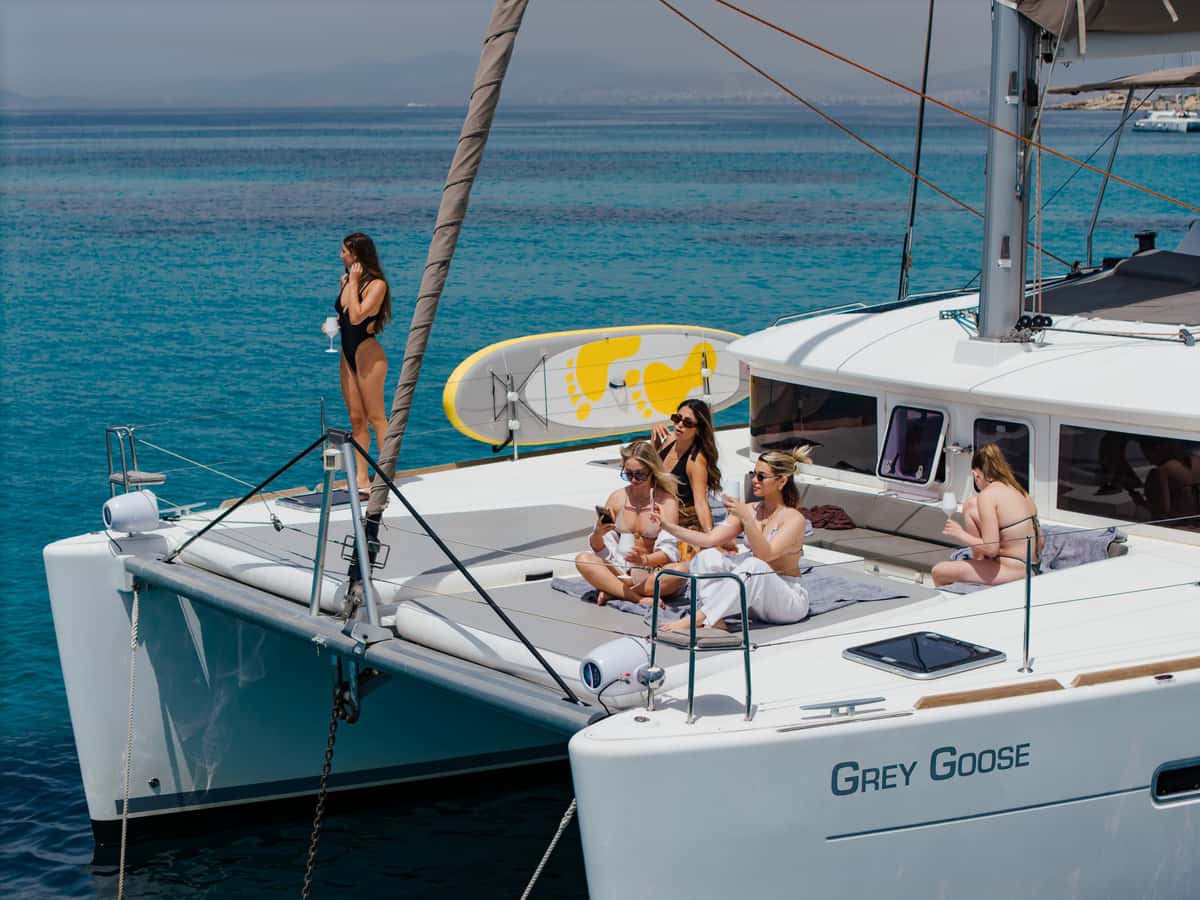
The swimming situation varies by island. Hydra has rocky coves accessible by water taxi. Poros has organized beaches a short walk from town. Aegina has sandy options at Agia Marina. On a cruise, the boat itself provides the best swimming — anchoring in sheltered coves away from the tourist beaches.
Another point worth making: the water quality in the Saronic Gulf is consistently excellent. Unlike some Mediterranean coastlines where visibility drops after August, Saronic water stays clear because of the strong natural currents flowing in from the Aegean. Snorkeling visibility typically exceeds ten meters even in peak summer.
Most day cruises visit all three islands in 8-10 hours, departing Piraeus around 08:00 and returning by 17:00-18:00. Lunch is typically served aboard between islands.
Lunch on a cruise is not just a meal — it is also a logistical decision. Operators who serve a real cooked lunch aboard save you from having to find a restaurant during your limited island time. Operators who make you eat ashore typically give you less time on each island, because you are eating into the schedule. Ask which format your cruise uses before booking.
Best time to visit: May through October. June and September offer the ideal balance of warm water, manageable crowds, and golden light.
A common question: can you do Hydra, Poros and Aegina independently by ferry in a single day? Technically yes, but the timing is brutal. You would spend most of the day in ferry terminals and have maybe forty-five minutes on each island. A cruise handles the routing so you can focus on the experience — you step off the boat, you explore, you step back on, and the next island arrives.
If you only have time for one of the three, make it Hydra. It is the island people talk about years later, the one that appears most often in travel writing about Greece, and the one most likely to surprise visitors who thought they were coming for a casual boat day. The stone harbor, the absence of engines, and the light against white walls combine into something you simply cannot replicate anywhere else in the country.
One important note: these three islands are best experienced by boat, not by ferry-hopping independently. A cruise handles the routing so you can focus on the experience.